
George Albert Roby
(1889 - 1963)
Early Days
George Albert Roby came into the family home on Christmas day, 1889. It is hard to tell if the blessing belonged to his parents, or to little Albert (as they called him) himself, being born into a well-established family such as the Roby's.
His parents, 54 year-old John and his 33 year-old wife, Minnie Remine Roby, were well-situated and highly respected in their home city of Breckenridge. John, having immigrated to the states from the duchy of Schleswig-Holstein 31 years prior, had settled into the new-world business life with hard work and a sharp intellect. He ran a dry goods store on Main Street, catering to the locals and large population of miners that had come west in search of their fortune, and in turn, had made a small fortune of his own.
His young American wife, Minnie, was over two decades his junior, yet proved the perfect partner to help John establish a family and win over the town with her drive and unending social graces. Albert was the eighth child born to John Detlev Roby and Minnie Agnes Remine Roby, although only four of his older siblings were living at the time of his birth: Frank, Clara, Detlev, and Carl. But she didn't stop with Albert. Three years later, in 1892, she gave birth to another girl - Agnes Mae.
Albert was born during the final decades of Colorado's great mining era. While gold and silver mining remained important to the local economy, increasing industrialization was beginning to reshape both mining operations and western communities. Growing up in the shadow of the Tenmile Range, Albert spent his childhood in a community whose fortunes were tied to the mines that had drawn thousands of prospectors to Colorado only a generation earlier. From Albert's earliest days, he and his siblings attended all of the local children's parties, and often hosted many of their own at the Roby home.
When the Spanish-American war broke out in 1898, Albert was only 8 years old, watching those around him suddenly preparing for war. His father's health was steadily declining, and his eldest brother, Frank, stepped up as one of the main supports of the large family. Local newspapers occasionally captured glimpses of Albert's youth. In 1899 he attended the Ringling Circus when it visited nearby Leadtown, an exciting event for children in the mountain towns of Colorado. Two years later, newspapers reported that he had been thrown from his horse while riding with a friend, suffering painful bruises to his face and shoulder. Fortunately, he recovered without any known lasting effects.
1900's
Albert turned 11 the year that Theodore Roosevelt became the 26th President of the United States (1901). His brother Frank had been battling typhoid for several months at this point, but was finally feeling well enough that the family was able to have a most grateful Thanksgiving.
Some local newspapers state that for some time during the early 1900’s Albert and his brother Carl lived with their aunt Fannie and uncle J.C. Wigginton, at their ranch north of Fruita.
One September afternoon when Albert was 13, the family received word that 27 year-old Frank, had been in an accident while on his way to the Mount Pride mine with a load of groceries. While no one saw the accident happen, it was determined that his team of horses had been startled by a Denver-bound passenger train, throwing him from his wagon and onto the tracks. Frank's neck was broken upon his fall and he was killed immediately, the train rolling clean over his right foot before it could be stopped.
A funeral for Frank was held at the family home on Ridge Street, and was described as one of the largest Breckenridge had ever seen, demonstrating his popularity and admiration throughout the town. A line of carriages, including that of the Red, White and Blue Fire department, accompanied the funeral party to the cemetery.
It was just over a year later that his father, John D. died on Halloween, leaving Albert and his siblings fatherless. Albert was 14 years old.
During the summer of 1906 he played baseball with the Breckenridge Juniors, and in September 1907 he placed second in the running broad jump at a local athletic competition with a leap of 16 feet, 11¼ inches.
1910's
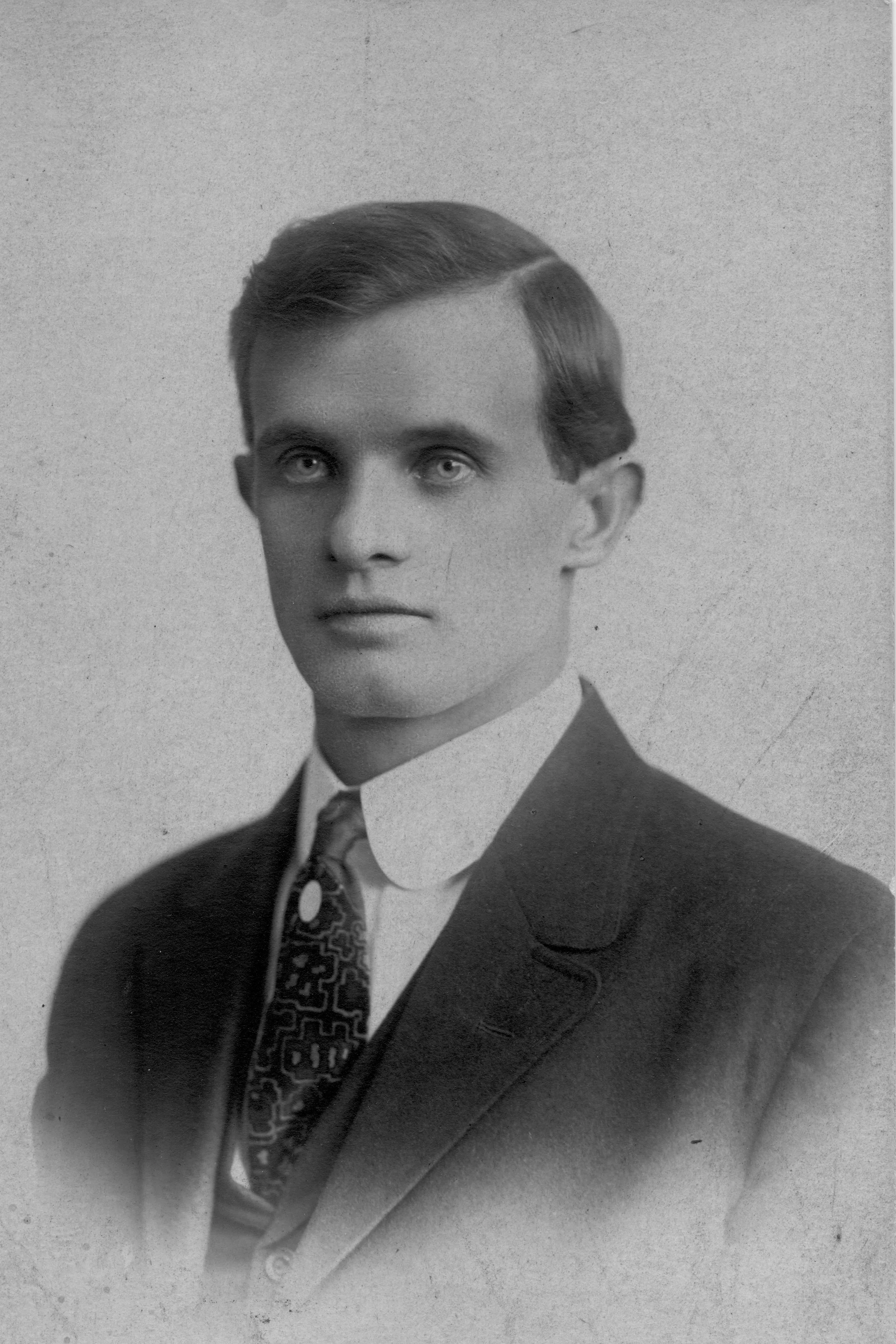
George Albert Roby
By 1910 Albert had entered the occupation that had shaped his hometown for decades. Census records list him as a gold dredge laborer in Breckenridge. His employment reflected a major transformation in Colorado mining. During the late nineteenth and early twentieth centuries, massive floating dredges replaced much of the labor-intensive placer mining that had characterized the Gold Rush era. These industrial machines processed enormous quantities of gravel, making mining more efficient while permanently altering the Blue River Valley landscape.
Albert was also active in community life. In 1913 he joined Blue River Lodge No. 49 of the Independent Order of Odd Fellows, one of Breckenridge's leading fraternal organizations. He played on the lodge's baseball team and, in July 1914, was elected Noble Grand, the highest office within the local lodge. Organizations such as the Odd Fellows provided fellowship, charitable work, and mutual aid long before government social programs became commonplace.
Only a few months later, on 7 September 1914, Albert married Harriet Gertrude Nodine in Breckenridge. Their Monday evening wedding was described by the local newspaper as a pleasant surprise to many of their friends. Within weeks, approximately thirty friends gathered at the Thompson property to celebrate the newlyweds with a wedding shower featuring music, singing, refreshments, and the presentation of gifts. The event reflected the close-knit nature of Breckenridge's mining community, where neighbors often shared in one another's milestones.
In the early Tuesday morning hours of September 12, 1916, Harriet and Albert Roby celebrated the arrival of their firstborn child. They called him John Albert Roby, though most would end up calling him Jack. Harriet and Albert had been married two years by this time, and Albert provided for his new family as many men in the area did - through hard work on one of the local Tonopah Placer Company dredges.
While the war raged on in Europe, the United States maintained a neutral stance for as long as they were able. It wasn't until the spring of 1917 that the United States declared war on Germany, joining the allies in World War I and forever changing America's relationship with the world. Jack was only seven months old.
His father, who was 27 years old at the time, may have had mixed emotions about the conflict, having grown up with a father who immigrated directly from Germany in his early adulthood. He was not alone. Nearly 28,000 Germans and Austrians were reported in Colorado in the 1910 census, and many still had a great allegiance for their home country.
Albert registered for the World War I draft in 1917, describing himself as a man of medium height and build with light blue eyes and dark brown hair. Although he registered for military service, there is no evidence that he served during the war. Also especially fortunate for them all, as Harriet was six months pregnant with their second child.
On September 18, 1917, Harriet gave birth to a daughter - a precious baby whom they called Frances Virginia.
By the time the rest of the country saw an official mandatory sobering in January of 1919 with the ratification of the 18th Amendment, Colorado had already been dry for a full three years. Underground (and not so underground) bootleggers aside, this would remain official law for the next 14 years.
That same summer, the Treaty of Versailles was signed; it took effect on January 10, 1920 putting an official end to the war.
By 1920 the young family had relocated to Lafayette, Colorado, and settled into a little house on Chester Street. Albert worked as a repairman in the area's coal mines. Lafayette was one of Colorado's principal coal-producing communities, supplying fuel for homes, railroads, and industry throughout the Front Range. Like many working families of the period, the Robys moved where employment opportunities could be found as Colorado's economy gradually shifted away from the mountain mining camps and toward larger urban centers. Unfortunately, the post-war era brought about hard time for the coal mining industry. People were turning to alternative fuel sources and continuing labor strikes added to the instability of the industry's production.
On August 18, 1920, some 26 million other women throughout the United States, was finally given the right to vote as the 19th Amendment granted universal women's suffrage. Harriet, however, was among the lucky women of Colorado, which had been the very first state in the union to welcome women to the popular vote an entire 25 years earlier.
1921 brought about the construction of Colorado's concrete highways on it's main travel routes.
That following November election, Warren G. Harding won in a landslide, bringing the republican party back to the White House.In August of 1923, President Harding succumbs to a fatal illness and his office is replaced by Vice President Calvin Coolidge.
By 1924, the family moved again, this time to Denver. Albert accepted employment as a clerk with Tritch Hardware Company, reflecting the changing economic landscape of Colorado. As mining declined in importance, Denver continued to grow as the state's commercial and retail center, offering new opportunities beyond extractive industries.
Tragedy struck the family in 1925 when Harriet died of penumonia at just twenty-eight years of age, leaving Albert a widower with two young children. The loss marked a significant turning point in his life.
Albert, knowing he could not rightfully care for two young children on his own, took them back to Lafayette to live with their aunt, Clara Newcomb, and family. There, Jack and Frances not only had a woman to look after them, but also the company of their three cousins, William, Alice and Dorothy.
This situation at his Aunt's was more suitable to the family at the time, but in the spring of 1926, Clara's husband, William, died suddenly, and Clara was left alone caring for not only her three children, but also Albert's two as well. Albert knew he needed to find a mother figure for his two young and impressionable children as soon as possible. He found that figure in 31 year-old schoolteacher, Hazel Laskey Holman.
Hazel's husband had been suddenly killed three years earlier in a mining accident, leaving her all alone to make matters worse, she was three months pregnant. Also in need of a father-figure for her baby, Hazel and Albert found the perfect arrangement in one another. In May of 1927, Albert and Hazel were married. The family once again settled in Denver.
The family would return to Breckenridge often to visit Albert's mother, Minnie, a sweet older woman who by this time lived all by herself, and whom the children loved.
The family attended church every Sunday, and went to Sunday school, and in the spring of 1928, Jack was baptized at the Central Presbyterian Church in Denver.
In November of this same year, republican President Herbert Hoover entered office.
Two months later, on October 29, 1929, the stock market plummeted, beginning what would later be known as the Great American Depression.
1930's
By 1930, Albert had begun working as a stock clerk at Whitney Sporting Goods Company. Throughout the following decades, city directories document the family's various homes throughout northwest Denver as Albert built a long and steady career in the sporting goods business. After working briefly for Whitney Sporting Goods Company and Max Cook Sporting Goods during the difficult years of the Great Depression, he returned to Whitney Sporting Goods, where he remained employed for many years.
In 1932, President Franklin D. Roosevelt enters office with a landslide victory.
In December of 1933, prohibition officially ended.
In March 1934 Albert underwent what newspapers described as a "very serious operation." Details of the procedure have not been discovered, although his World War II draft registration later noted a surgical scar on the right side of his abdomen. Despite this health challenge, he continued working and remained active in the Odd Fellows.
January 15, 1935, Albert’s mother, Minnie, passed away at the age of 76.
When Jack was in his senior year of high school, Albert became sick to the point he could no longer work. Jack left school to get a job and help provide for the family until his father was well enough to return to work, leading to him graduating mid-term.
That fall, the United States once again declared its neutrality in the European war.
1940's
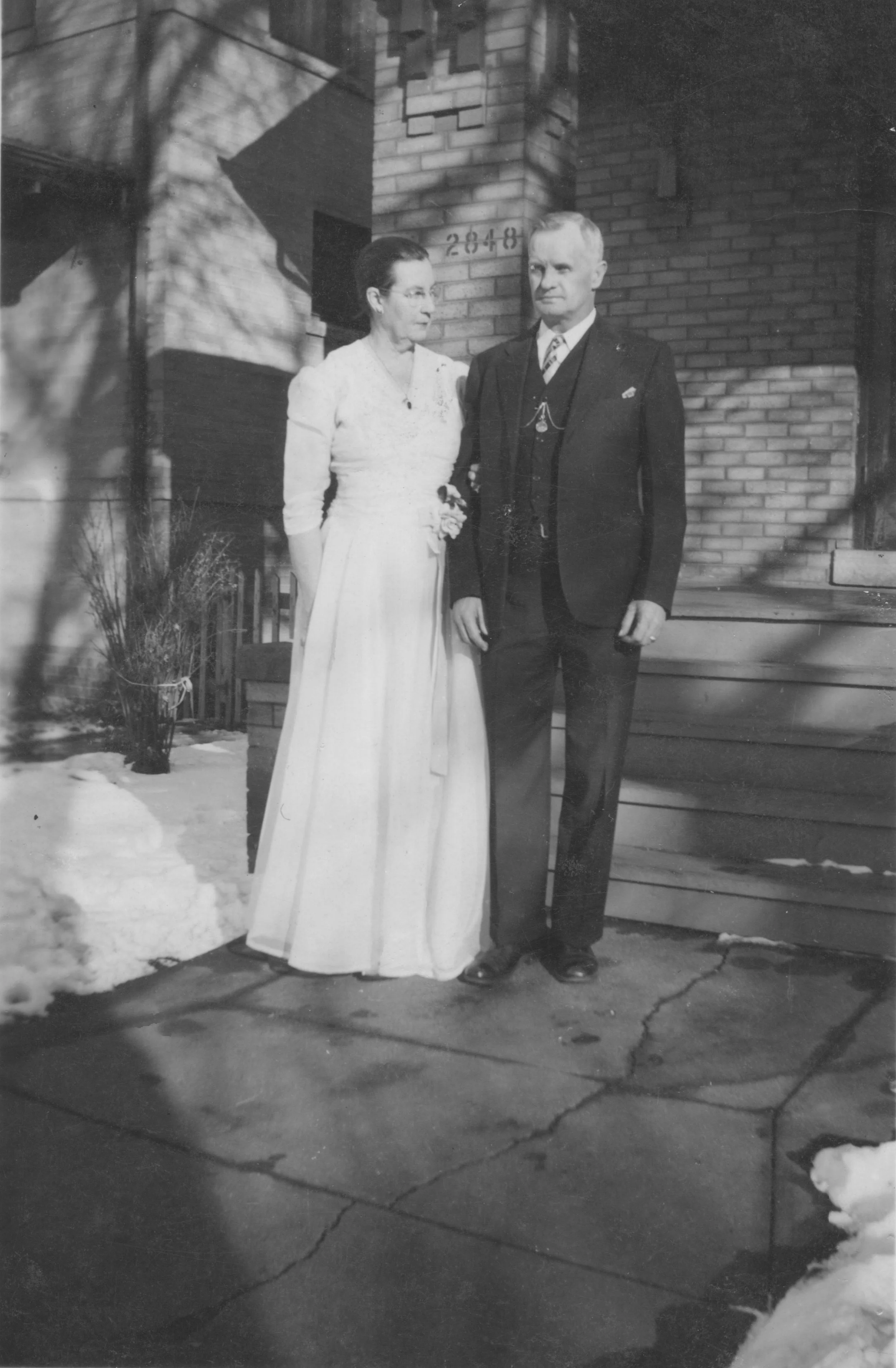
Hazel and Albert Roby
In September of 1940, amidst an escalating situation in Europe, the U.S. Congress enacted the first peacetime conscription draft. Shortly after, F.D.R. won his third presidential election, becoming the first man to hold office for three (and later four) terms.
In 1941, news hit of the terrifying and tragic Japanese attack on Pearl Harbor, and the U.S. declaration of war that followed.
On April 12, 1945, at the height of the war, President Roosevelt died suddenly, and Vice President Harry S. Truman assumed the role of President. Four months later Truman issued orders for the use of the atomic bomb on both Hiroshima and Nagasaki, leading to the surrender of the Japanese delegation and the end of WWII.
It may have been a time of peace, but the conflict was not over. Instead, a new period of Cold War began and fear of the communist threat began to sneak into the American psyche. It's hard to imagine what this time must have been like for the couple, Esther, coming from a family of strictly Russian origins.
1950's
The summer of 1950 saw war once again - this time in Korea. It lasted three years, but is often termed the "Forgotten War". In addition, the "Red Scare" was really starting to intensify.
The election of Dwight D. Eisenhower was another landslide in 1952.
That same year, the first color televisions go on sale. NBC was the only network to broadcast in color at the time, and the sets were very expensive, so they didn't really gain household popularity until the early 1960's.
May of 1955 brought the integration of public schools in the United States with "deliberate speed", and January of that same year Rosa Parks infamously refused to give up her seat to a white man on the public bus. The next several years would be marked by civil rights protests that would change the face of American society as everyone up until this point had known it.
This same month, his brother, Carl died in California.
In 1956 he represented his Odd Fellows lodge as a delegate at a state meeting in Grand Junction, demonstrating his continued commitment to the organization that had been part of his life since his early twenties.
Those who knew Albert remembered him as "a very fine gentleman" and a hardworking man. While these recollections come from later family interviews, they are consistent with a life marked by decades of steady employment, civic involvement, and devotion to family.
1960's
That November, the United States bid farewell to President Eisenhower and welcomed John F. Kennedy to the White House.
The fall of that same year brought about the Cuban Missile Crisis, a conflict which lasted a total of 38 harrowing days in which many believed the Cold War might actually break into armed conflict.
Following Hazyl's death in 1962, Albert relocated to Portland, Oregon. There he married Vernie Gertrude Guthrie on 18 May 1963. Tragically, the marriage lasted only four days. On 22 May 1963, Albert suffered a sudden heart attack caused by blocked coronary arteries, with diabetes contributing to his death. He was pronounced dead upon arrival at St. Vincent's Hospital in Portland at the age of seventy-two.
Albert's lifetime spanned one of the most transformative periods in American history. Born during the era of horse-drawn transportation and frontier mining camps, he witnessed the arrival of automobiles, airplanes, radio, television, interstate highways, and the dawn of the Space Age. His own journey—from a childhood in Colorado's gold fields to a long career in Denver's growing retail economy—mirrored many of the economic and social changes that shaped the American West during the first half of the twentieth century. Though he never sought public recognition, the records of his life tell the story of a hardworking husband, father, community member, and Coloradan whose experiences reflected those of countless ordinary Americans who quietly built the communities in which they lived.
1. Ancestry.com, U.S., Social Security Applications and Claims Index, 1936-2007 (Provo, UT, USA: Ancestry.com Operations, Inc., 2015), John Albert Roby. 2. John Albert Roby, 521-18-8072, 2 March 1939, appliation for social security, Social Security Administration, . 3. Ancestry.com, 1920 United States Federal Census (Provo, UT, USA: Ancestry.com Operations, Inc., 2010), Year: 1920; Census Place: Lafayette, Boulder, Colorado; Roll: T625_156; Page: 15B; Enumeration District: 37. 4. Ancestry.com, 1930 United States Federal Census (Provo, UT, USA: Ancestry.com Operations Inc, 2002), Year: 1930; Census Place: Denver, Denver, Colorado; Page: 6B; Enumeration District: 0220; FHL microfilm: 2339967. 5. "John Albert Roby oral interview, recorded with John Albert "Jack" Roby," 2004 by Liza N. Reid, owned by Liza N. Reid, 1975 Grand Army Rd., Labadie, MO 63055, tape recording. 6. Ancestry.com, 1940 United States Federal Census (Provo, UT, USA: Ancestry.com Operations Inc, 2012), Year: 1940; Census Place: Denver, Denver, Colorado; Roll: m-t0627-00484; Page: 3B; Enumeration District: 16-32. 7. Ancestry.com, 1910 United States Federal Census (Lehi, UT: Ancestry.com Operations Inc., 2006), Year: 1910; Census Place: Breckenridge, Summit, Colorado; Roll: T624_125; Page: 2B; Enumeration District: 0150; FHL microfilm: 1374138. 8. Ancestry.com, U.S., World War II Draf t Registration Cards, 1942 (Lehi, UT, USA: Ancestry.com Operations Inc, 2010), The National Archives at St. Louis; St. Louis, Missouri; World War II Draft Cards (Fourth Registration) for the State of Colorado; Record Group Title: Records of the Selective Service System, 1926-1975; Record Group Number: 147; Box or Roll Number: 117. 9. Ancestry.com, U.S., World War I Draf t Registration Cards, 1917-1918 (Provo, UT, USA: Ancestry.com Operations Inc, 2005), Registration State: Colorado; Registration County: Summit; Roll: 1561802; Draft Card: R. 10. Ancestry.com, U.S., Social Security Death Index, 1935-2014 (Provo, UT, USA: Ancestry.com Operations Inc, 2014), Number: 522-01-2221; Issue State: Colorado; Issue Date: Before 1951. 11. George Albert Roby, death certificate State File No. 17, Registrar's No. 98, Dist. 217 (1957), Bureau of Vital Statistics, Dept. of Commerce Bureau of Census, . 12. Ancestry.com, Oregon, State Marriages, 1906-1966 (Lehi, UT, USA: Ancestry.com Operations, Inc., 2018), Year: 1963, State File No: 3159, County File No 65609. 13. Ancestry.com, 1900 United States Federal Census (Provo, UT: Ancestry.com Operations Inc., 2004), Year: 1900; Census Place: Breckenridge, Summit, Colorado; Page: 3; Enumeration District: 0152; FHL microfilm: 1240129. 14. Newspapers.com, "Highpoint," The Daily Sentinel (Grand Junction, Colorado) , 27 July 1955, page 6; digital, Newsp ap ers.com (www.newspapers.com : downloaded 4 November 2019); https://www.newspapers.com/image/537553367. 15. "Mrs. Albert Roby," page 10. 16. Ancestry.com, U.S. City Directories, 1822-1995 (Provo, UT, USA: Ancestry.com Operations, Inc., 2011), Title: Denver, Colorado, City Directory, 1924. 17. "Highpoint," page 10. 18. "Mrs. J.C. Wiggington Died Last Night At Lower Valley Home," page 5. 19. Ancestry.com, WWII Draf t Cards Young Men, 1940-1947 (Lehi, UT: Ancestry.com Operations Inc., 2011), The National Archives in St. Louis, Missouri; St. Louis, Missouri; WWII Draft Registration Cards for Colorado, 10/16/1940 - 03/31/1947; Record Group: Records of the Selective Service System, 147; Box: 204; John Albert Roby. 20. "Highpoint," page 7. 21. Ancestry.com, Oregon, Death Index, 1898-2008 (Provo, UT, USA: Ancestry.com Operations, Inc., 2000), Oregon State Library; Oregon Death Index 1931-1941; Certificate 7239. 22. Ancestry.com, Colorado, County Marriage Records and State Index, 1862-2006 (Lehi, UT, USA: Ancestry.com Operations, Inc., 2016), Film Number: 001690128. 23. , Colorado, County Marriage Records and State Index, 1862-2006, Film No. 001690129, Record No. 10567. 24. , U.S. City Directories, 1822-1995, Title: Denver, Colorado, City Directory, 1932. 25. Ancestry.com, Oregon, Marriage Indexes, 1906-2009 (Provo, UT, USA: Ancestry.com Operations, Inc., 2000), Oregon State Library; Salem, Oregon; Reel: 11-18.